
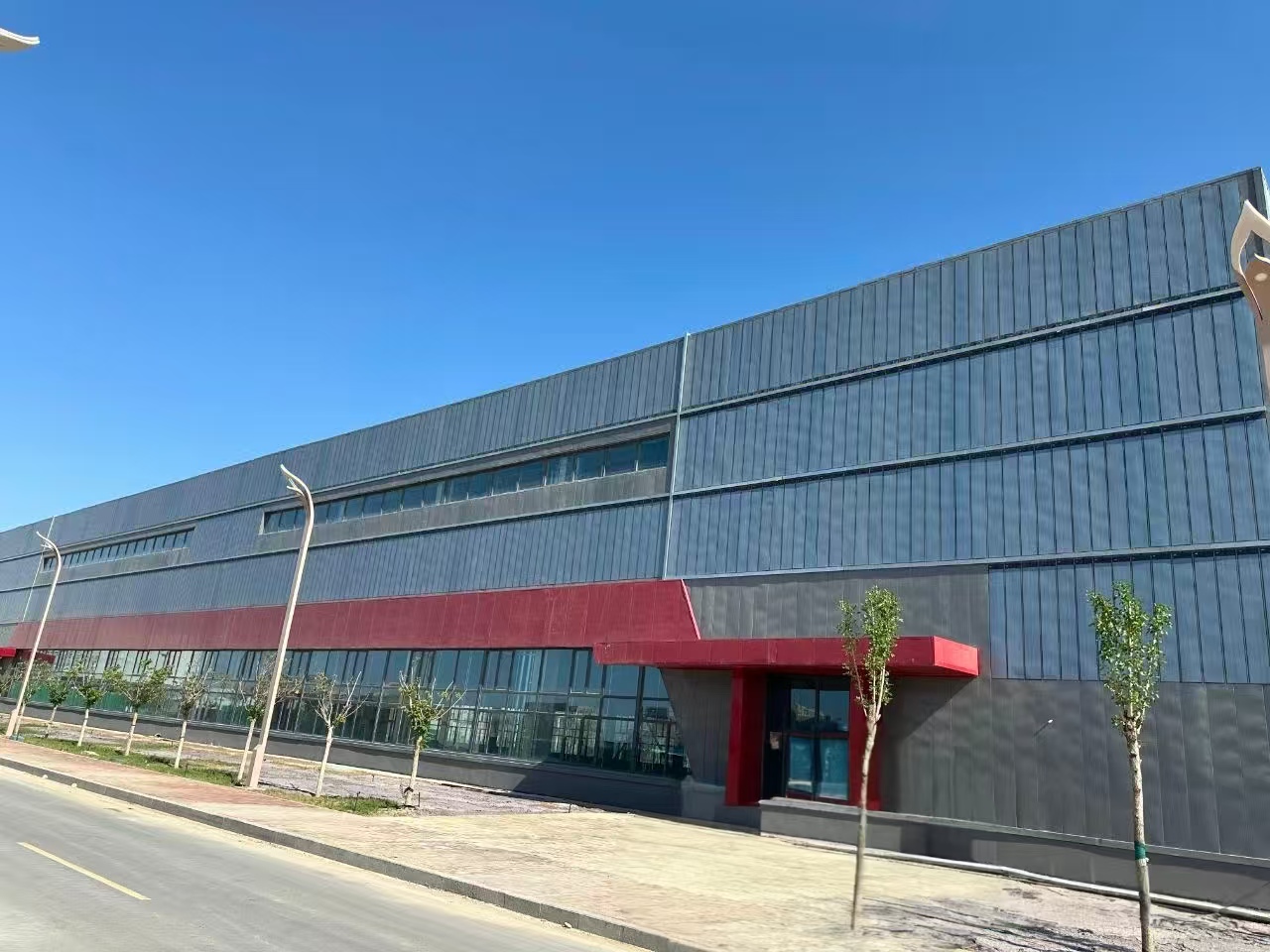


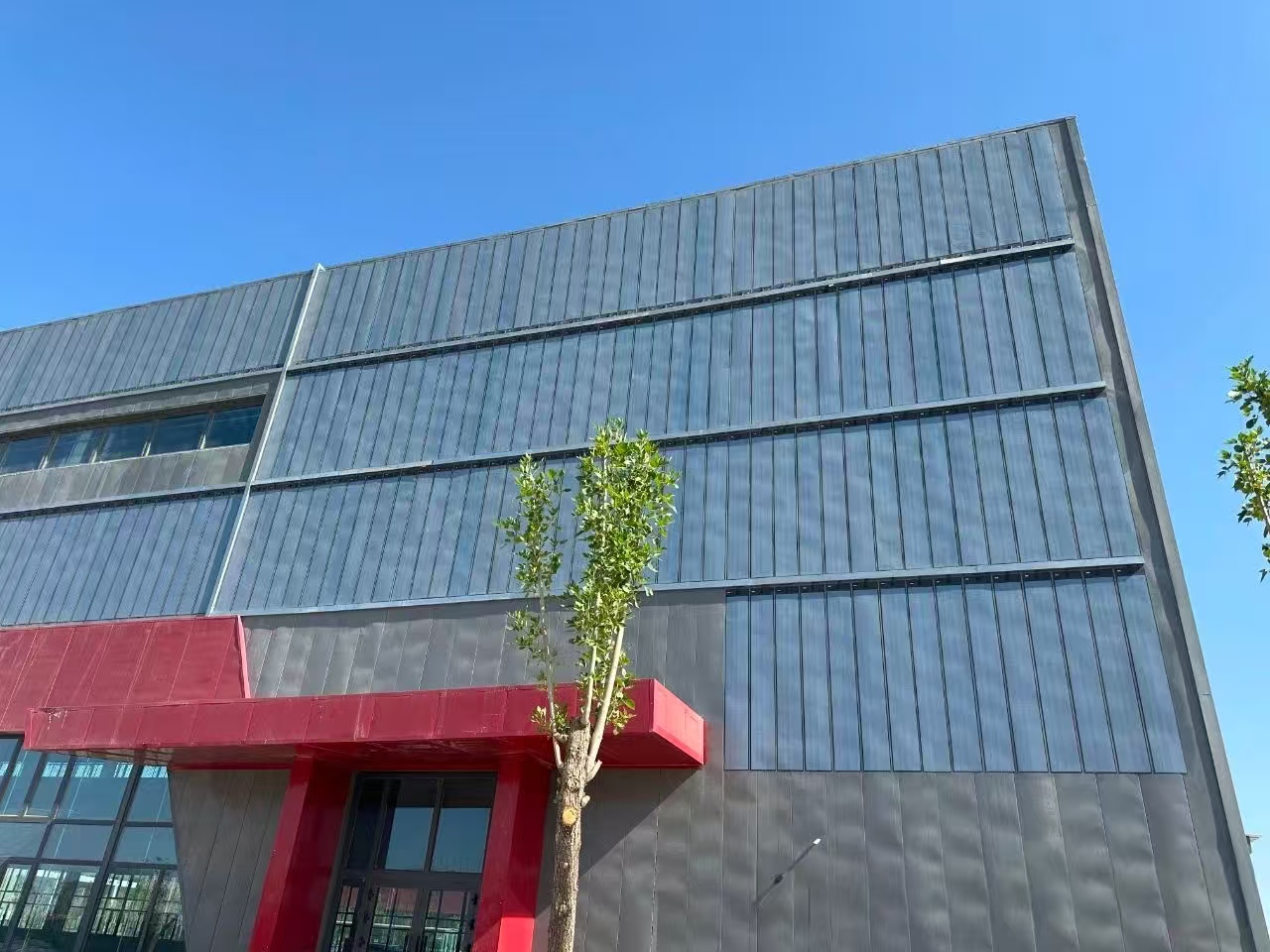
CIGS Flexible solar energy empowers campuses, illuminating a new green chapter in Hami.
Recently, the Hami New Campus of Xinjiang Railway Vocational and Technical College saw an upgrade in green energy. The company innovatively used 660 pieces of 90-watt colored flexible CIGS photovoltaic modules, vertically installed on building facades, successfully creating a "facade photovoltaic power station" for the energy transformation of buildings in the northwest sun-rich region, providing a breakthrough model.
1.Vertical Breakthrough: 59.4 kW of green electricity "grows along the wall"High efficiency: A total installed capacity of 59.4 kW, generating over 63,300 kWh of electricity annually.Significant emission reduction: Carbon reduction of about 57 tons annually (equivalent to planting more than 3,100 trees), helping the campus step into "low-carbon operations."
2. Flexible CIGS: Three major technological tools conquering the northwestFlexible fitting: Millimeter-level thickness and bendable characteristics allow it to perfectly fit on facades without occupying rooftop functional space.Color integration: Unique membrane layer technology achieves unity of module appearance with building style, eliminating visual abruptness and practicing "energy as aesthetics."High efficiency in light capture: Wide spectrum absorption technology significantly enhances efficiency in low light, enabling effective capture of slanted and reflected light even with vertical installation under Hami's average of 3,500 hours of strong sunlight per year.
3. Scene Revolution: Activating the potential of "unused facades" in the northwestSpace breakthrough: Directly addressing the pain points of "limited rooftops, infinite facades" in northwest buildings. If 10% of buildings in Xinjiang adopt this technology, the annual increase in green electricity could exceed 10 billion kWh.Demonstration leadership: Providing a "zero-carbon renovation" model for campuses, hospitals, and other public facilities, which can be replicated in regions like Turpan and Jiuquan.Extreme testing: The modules have passed rigorous salt spray and temperature tests (-40℃ to 85℃), proving their high reliability in the drought and large temperature difference environments of the northwest.
4. Future Vision: Buildings as energy producersThe "facade power generation" practice at the Hami campus not only opens new paths for the development of abundant light resources in the northwest but also outlines a zero-carbon future where "every building generates its own electricity." Flexible photovoltaics are breaking the spatial boundaries of energy acquisition; from facades to curved surfaces, their deep integration may redefine the relationship between buildings and energy. This green experiment in Hami has already become an important starting point for the architectural energy revolution.
 冀公网安备13050302001975号